Showing posts with label trapping. Show all posts

Sunday, October 17, 2010

Outer Banks Beach Trapping


I got a call from Dan yesterday. He was the NC falconer who got one of the the peregrine falcon trapping tags. We had a good conversation about their trials and tribulations trapping on the Outer Banks. He never did fill his tag.

Neither did Allen, the falconer from Maryland who pulled the other peregrine tag.

I am still learning about this beach trapping thing, but I have made a few observations over the years about trapping in this place I call home. I'm glad Dan left here with a positive attitude, even though he and his friends had many obstacles. And he left without his peregrine. He came in with the right attitude.

Trapping here is tough. Getting good land permission is almost impossible. I had permission on two different tracts of land and we had identified a third possible site on the map. I wanted to see where the birds were.

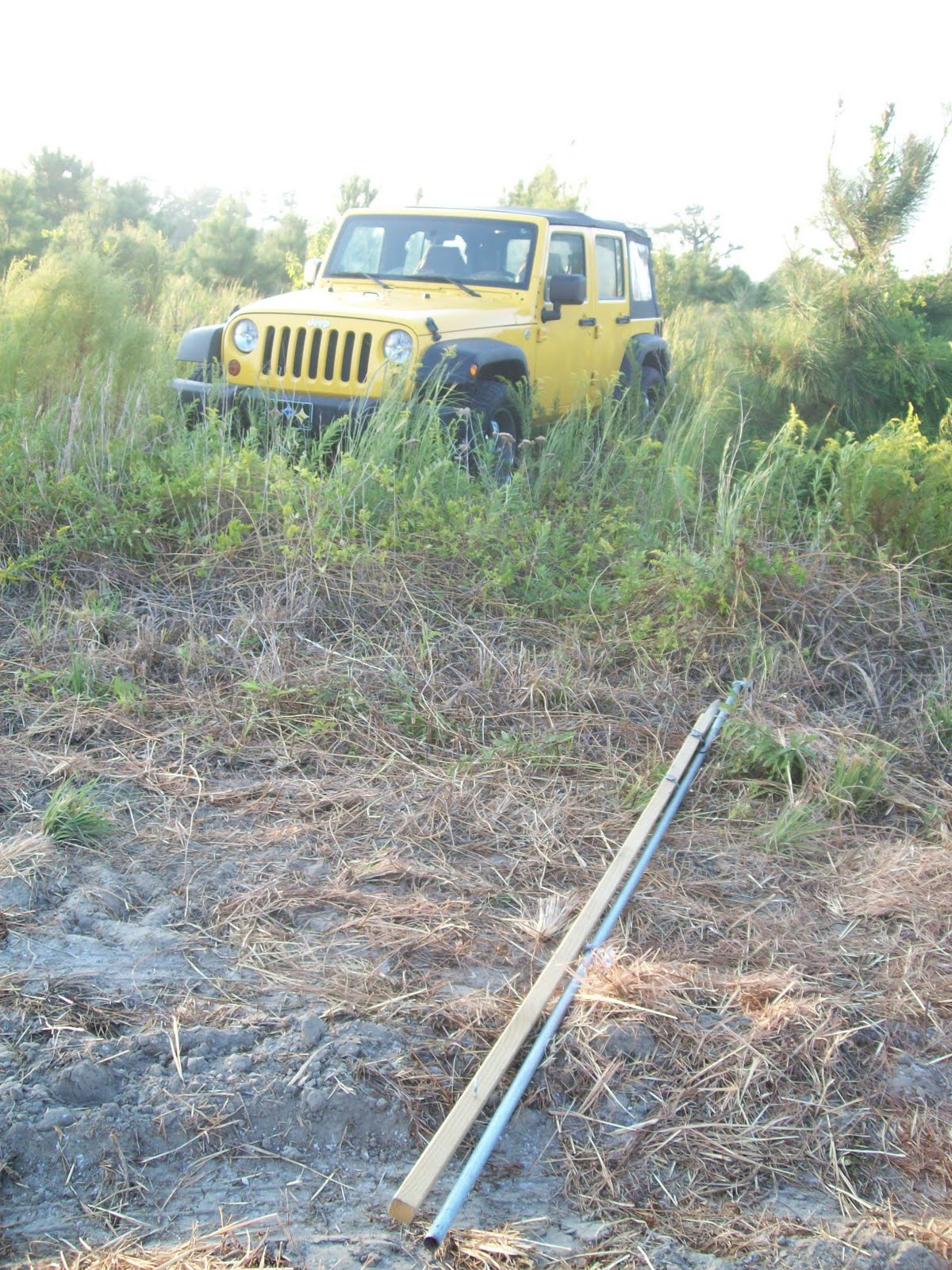
If you come here to trap - bring four wheel drive. Good four wheel drive. Much of the good trapping sites are through the dunes, where there are no roads. Dan's group got stuck in a hole in a dune track. We'd had lots of rain, there was flooding, and the hole was deeper than they thought. $450 dollars for a tow - w0w.

Anyway. You need four wheel drive, and you need time. we were plagued with high winds and bad weather. And very few birds moving this year. You can't expect to trap a peregrine in two or three days. Could it happen? Sure. But it rarely does.

Plan on a week, maybe more. and lots of time in the blind. Certain weather patterns promise more birds. Not always. North winds seem to provide the most, but they can't be blowing too hard. I can't see not trapping because the winds aren't exactly right. Really, I only need one bird, the right bird, to come to the nets. That could happen any day.

I hear stories about Cape May and Virginia's North shore, Virginia, and ridge trapping. I get emails from guys who are catching 4, 5, 15 birds in a day.

I've never had that happen here. Could my trapping be substandard? am I not doing everything I could? maybe. The fact seems to be that we just don't have the concentrations of birds funneling down our beaches like other areas. I don't know where all the birds go. They seem to disperse once they leave the kiptopeke hawk watch site.

We don't see those numbers.

If you don't have a lot of time, nor are you patient. Don't draw a tag to trap in North Carolina. Make sure you have permission from landowners before you come and know the conditions that you will be facing. Dress and drive appropriately. Plan on disappointment.

Dan and his group treated it like a trapping vacation. They trapped during the day, spending time with friends. they ate well at night. they watched football in the evenings. Treat it like a vacation where instead of golf, or fishing, your spending time with your friends in a 4X4 blind, shooting the breeze and watching birds (or not).

Dan went home with a merlin. Four of the trappers left the beach with merlins. Other birds were trapped and released, merlins and coopers mostly. His bird is flying to him inside the house now and he is starting to think about how to introduce it to game.

Good - he's having fun. That is what falconry should be about.

Tuesday, October 5, 2010

Weekend was a bust - but...


A lot of guys came down this weekend to trap. Two of them had the coveted peregrine tags. Arnaud and I wanted merlins, others were along for the ride. Some are still here - but Mother Nature was not cooperating.

We separated into three groups. Beachfront, soundfront, and mainland. We tried to spread ourselves out to figure out where the hawks were migrating. There just isn't any data for our state about exactly where the highest concentrations are flying.'

So, it was an experiment.

The guys arrived on Friday and checked out where they were going to be setting up their equipment.

Arnaud brought his merlin, so I was able to keep my eye on the prize. Then first thing Saturday morning we split up and went our separate ways.

Arnaud and I stayed in the mainland sight, waiting for the birds, but honestly, they were scarce. A coopers hawk here, a kestrel, etc.

Here is our sparrow bait strapped into a Millican harness, which worked very well. (thanks Johnathan)

The wind was out of the south, we rationalized that the birds weren't coming.

Bon showed up mid afternoon and took my spot, so I headed north and stayed with the boys on the soundside. now to be honest, they could see from one side of the beach to the other. Any bird in the sky, they should have been able to see it.

But the birds weren't there.

Sunday it rained and the wind blew at 20 - 30 miles an hour. We set up the beach site and tried all morning, but it was too miserable and there were no birds in the sky. We gave it a break, then tried again later when the rain had slackened. Merlins zoomed by, the wind carrying them past.

Nothing slowed for more than a second to look at our nets. And to be honest, the gusts were blowing them crazily, making them clearly visible.

The weekend was a bust.

I had taken Monday off - just in case. Everyone else set up along the beach, I opted for the mainland. I sat through the day and saw only one coopers. He came right to the pigeon, but landed behind the nets. I tried to scare him into the nets, but he flew off. And that was it.

I called it a day at 2:00. I packed up, knowing that my trapping chances were over. I was trying to come up with plan B. Maybe a kestrel?

Not sure.

On the way home I get a call from Arnaud on the north beach. They're seeing falcons and he's trapped a merlin.

After a few frantic phone calls, I change my plans, rearrange the kids ride schedules, then head north. There were a few hours of sunlight left.

I rode down the blowing sandy beaches, keeping to the ruts in front of me. I crossed the dune, and drove through the fields and past some local wildlife. I noticed none of it. I was frantic to get there.

When I got there Arnaud had trapped another bird, a male this time. he had figured out the secret to merlin trapping on the Outer Banks.

It was the merlin tree. He set up behind it and it drew the birds in. weird.

By the time I left the trap site that night, there was another female merlin sitting on the seat next to me. She was trapped at 208 grams and is a gorgeous chocolate brown.

Still looking for a name.

and there are some guys still looking for their falcon.

I'll keep you posted.

Wednesday, September 29, 2010

Dry Run


I took the blind, nets, and bait birds out for a dry run on Saturday. It was my first day off in I don't know how long, and all the trapping indicators were wrong.

But that is alright, I just wanted to give it a try.

I set up the nets Friday night, leaving them collapsed, but ready. Bait poles were hung with lure line and ready for the bait birds. I slept roughly Friday night. Often before a big outing, I can't sleep This was like that.

I got out of bed before my alarm and made it to the trap sight as the sun crested the horizon. I finished setting up, strung up the nets, and placed the bait birds on their strings.

The wind was perfectly wrong, 10 miles an hour and coming pretty directly from the South. I only needed to trap one bird though, only one bird migrating through the area.

Everything pointed almost directly North, the nets set in a V around the bait.

Then I waited. Egrets flew into the field and started picking at the ground, and quail took dust baths in the distance.

A single merlin blew by me, paying no mind to nets, bait, or other enticements. It just winged its way south.

Then Nothing. The sun moved high in the sky, and nothing.

I left the blind to stretch, only to see a peregrine pursuing another bird. They swirled and twirled in reckless abandon, zig-zagging their way across the field, then ringing straight up to the sky, and plunging back down, skimming the ground.

Gone - over the horizon, then nothing.

I pulled and pulled on the bait pigeon. Nothing flew over, only vultures and crows.

Vultures and crows.

The day ended with a Merlin, flying low over the nets, checking out the bait. It noticed the bait, but never really slowed.

A full day listening to my own inner dialogue with no action in the nets at all.

But, the tension in my neck was gone, I was calm, relaxed.

Maybe I need to spend more time doing nothing for hours on end. It might be good for me.

Wednesday, September 15, 2010

Whatcha doing?


Gettin' ready. This time of year is real busy. I'm working two jobs, seven days a week. Trapping season is soon upon us. Soccer for the kids has begun in earnest - That's three traveling teams and the middle school team for the oldest.

Oh - and I'm in a triathlon this weekend.

I think that's enough.

But in between driving here and there, work, wine and song - I've been getting nets ready.
I'm trying a new design for my small nets. I have stolen the idea from a net that Andrew had when we were trapping last year.

I've taken and made stationary posts out of 1.5 inch pvc. I painted it camo (cause I think its funny that they have a paint color 'camo'). Now I can theoretically drive around with the nets set up in the back of the car, ready to set it up at a moments notice.

On the single leg in back I've drilled holes so that I can attach a bait bird to the net structure itself.

The rings on the side are to let the net collapse around the caught bird, without having the untangling issues I've had in the past.

I've left holes open in the bottom of the uprights as well, so I can still stake the whole structure to the ground. I had a peregrine last year blow through the net, pull down the poles, untangle itself, and then fly off before I could get to it.

Heart wrenching.

I don't think that can happen here.

For a release mechanism I use clothespins attached loosely to the ends of zip ties. Eric Edwards has pictures of the same mechanism on his nets.

Next I work on the lure poles - trapping will be here soon.

Oh - and Tess is at weight, ready to hunt. 905 grams today.
I changed her jewelry, and as soon as I have an opening in the schedule, we try some car hawking.

Sunday, August 29, 2010

Getting Ready


I've been out of the loop for a bit - and for that I apologize. The temperature has finally cooled, and school has started. I'm still working the summer job on the weekends, as well as trying to get the birds to a healthy flying weight (we're real close). The combination of these things has made time a commodity of which I have had little as of late.

Regardless, the getting ready games have begun.

Emails have been flying back and forth as preparations are made for trapping season to begin. A new friend down the coast is helping to trap bait birds.

I've always had a problem with securing enough sparrows and starlings to use as bait for merlins, so he brought me up a few and I'm housing them in a make shift shed next to the pigeon loft. I've also set my own elevator trap. Hopefully, I'll get one or two in the next few weeks.

I've been checking the hawk watch counts for the best times to trap. We're after both merlins and Peregrines, their migration time overlap at around the end of September, beginning of October.

I pulled out all my nets, poles, blinds and such to see how they have fared, waiting in the shed for trapping season to roll around. I had forgotten that I had let another trapper borrow my nets, and equipment, so I regarded their storage with trepidation. I hate untangling a net. - let alone three or four.

I set up the blinds, only to find that my oldest ( and cheapest) has lost its shape, and I don't think it will be any use to us this year. Hopefully, some of the other trappers will have blinds they can use. If not - I suppose we could always just use a tent.

The nets beckoned. With the air being cooler, and the humidity lower than it has been all summer, the coming of Fall truly seems like a reality. I am giddy with anticipation. Its silly really how much emotion I have wrapped into all this, but I can't wait.


I pulled the poles apart. The other trapper hadn't stored them the way I would have liked. I unhitched the thread, and then began to unwind the nets. They came apart easily - he did well.

I checked the thread, the knots. Then I wound them back up (my way) and set them back in the corner. I'm about ready - I just need a few things and it won't take long. Trapping will be here before I know it.

Monday, August 9, 2010

Time to start paying attention

It is mid August and for the last five months my hawks have been hog fat. They've been up for breeding, but apparently I didn't accommodate them with the right mood music. They've been down in their weathering area and I have been pretty much leaving them alone while they molt.

The molt is about done. If you look closely at the tail feathers of Gonzo, the last few tail feathers are just about grown in.

Squirrel season doesn't open until mid October, but it is time to start watching the hawks weight.

Neither bird will come to the fist right now for food, so I need to start cutting their food intake. Once they get to a point that they will start snatching at the fist, I will snag one and start weighing them.


I would like to start car hawking Gonzo by mid September. This will get him into shape for squirrels in October.

In the meantime, I need to get out all my nets and B.C. s and start checking them over. Trapping is about a month away and school starts in two weeks, limiting my time. Things should start to get interesting here real soon.

Thursday, October 15, 2009

2 out of 3 ain't bad


I have spent the last week (plus) mostly in a blind on the dunes of the North Carolina coast. The weather fluctuated mostly from bad to worse. Not because it was miserable, but more because the winds were not conducive to birds moving on their migratory routes. The main goal, of course, were peregrines. Secondary, we were after merlins.

As you already know, Andrew got his bird early in the week, and then he was in and out of the trap site for a few days, but soon he had to go out of town on business. That left Elizabeth from Pennsylvania, and Jim.

Jim had to leave early, and never got his falcon. We are hoping that he is not done. But then all that was left was Elizabeth, up on the dunes, watching the clouds scuttle across the sky, and the larks winging their way south.

But she caught nothing, all week long. She sat in the blind, working the pigeon bait, and waited.

Nothing

We had more trappers come in this last weekend to help. Arnaud came back, and my sponsor Chris. And we joined her on the dunes. We did see lots of birds. We trapped a sharp shin, and had falcons and merlins buzzing our nets, but nothing got caught.

I had to leave and do my education thing. Saturday was winding down, Elizabeth had to return to PA on Sunday. Time was running out.

Then a peregrine came into the pigeon, popped over top of the net, and slammed it from above. It worked its talons in the pigeons back, staring around balefully. What to do, what to do.

Arnaud snuck out from the blind, covering his movements behind a bush. Then he charged, crashing through the foliage, scaring the bejeepers out of the peregrine. It jumped off the pigeon and burst into the air, into the net.

And was caught.


and there were two.

Tuesday, October 6, 2009

Beach Trapping

We started off on Saturday afternoon. It was Andrew, Arnaud, and myself, the rest of the trappers would be in and out throughout the week. The sun was high as we motored our way across the sand to the trap site.


We wandered the dunes looking for good high spots and good background cover to hide the nets.

The area was desolate and high. Grape vines and sea grass covered the dunes and would act as a good backdrop. There were literally dozens of acceptable sites but we decided on two spots where we could set up the nets. You could see all the way across this spit of land, ocean to sound. It should be a good funnel for the birds.

Unfortunately, the weather would be working against us for the next couple of days. The wind was from the South, or the West, and migrating birds were few.

Our spot was good, the equipment all worked well, but we would be fighting the weather and that was one variable over which we had no control. I didn't have much hope until the wind changed. That wouldn't happen until later in the week.

As we chose the best spot, a peregrine cruised by, low and slow, close enough that we could hit it with a rock. We needed to hurry up.

We got set up and sat in the blinds watching the sky, pulling on the string that would make the bait flutter. Nothing.

We spent the rest of Saturday in the blind seeing nothing. Then with very little rest, we would come out before first light, and then stay until after dark. We didn't see many birds. We were becoming discouraged with the air heating up inside and Andrew's head lolling on his neck from lack of sleep.

At the end of the second day, the guys from Rocky Mount showed up.
We set up another blind, but no more nets. The day was quickly ending, and we were all discouraged.

We had seen a few merlins, and a peregrine had flown by without showing any interest. It seemed like this day was going to be another bust.

When a Peregrine took interest in one of the bait birds. She started circling Arnaud's net. We were communicating between blinds by cell phone, whispering urgently. The bird drifted back over my nets. I pulled the bait string urgently, then I got a call from Arnaud.

"It's over our blind!" I whispered urgently. " It's right here."
"No, It's in my hands."
"No, it's coming into the net right now."
"IT IS IN MY HAND!"

And there it was. The first legally trapped peregrine in 37 years had been caught and was cradled in the hands of her new partner, Andrew. His fingers shook as he and Arnaud extracted the bird from the net and jessed her up.


She was a tad on the thin side, but otherwise feather perfect.

I admit to that envy struck me hard. But with this bird, and Andrew's young Weimaraner,
and of course Tess and Gonzo, it should be an exciting season.

She really is a gorgeous bird.

Two more peregrines to go, and maybe a merlin for myself and Arnaud.
I won't be trapping for a few more days, but I'll keep you posted on the results.

Monday, October 5, 2009

Stories to come

Long, long weekend. There will be stories.

Congratulations Andrew!

Saturday, October 3, 2009

Time

The first peregrines on the east coast have already been trapped so we won't be the first. We set up or site this morning, getting it all ready.

Things will be quiet around here, as we attempt to trap peregrines and merlins. It will be exciting and I'll post pictures as soon as I get back.

Thursday, October 1, 2009

Passage Red Tails

Trapping season is well underway for most falconers. Fall is the time to get out and look for that next best hawk. Sure, some will purchase a new bird from a breeding facility, but there are still plenty of die-hards out there who prefer to trap and train their own bird.

For many, that bird will be a passage red tailed hawk. If you are new to falconry, passage refers to a first year bird that is making its very first migration (or passage).

By law, falconers can only trap a first year bird for falconry. Often people ask why someone would want to take a bird out of the wild. Well the reasons are many, but most would agree that birds out of the wild often seem to make better, more aggressive hunters. They have been out there and they know how to use their eyes and their wings to catch prey.

The falconer works with the bird for a few years, (saving it from that 90% mortality rate over the first five years)then the bird is often released back into the wild, better off than it would have been if it had never been hunted.

Another question I often get is how do I know it is a young bird. They are full grown after all, and don't they all pretty much look alike?

Well, no. In many birds of prey, their feathers change after their first year. Sometimes it is something subtle, like increased flecking, or narrower bands on the tail, but with red tail hawks the difference is significant.

Notice the tail..... It's not red. That is how you know it is a young bird.

Also, from a distance, you can look for the bright white chest. In older birds, the chest has a creamier, rosy color to it.

So keep your eyes open. You often will see these birds sitting on power lines, or poles. You see them on prominent snags of dead trees.

See if you can tell. Is that a passage bird, or an older bird (a haggard).

Wednesday, September 16, 2009

Disappointed

First off - I love Cabelas! I love the idea of it. I love getting the catalogs throughout the year, but the big fall catalog is my favorite. They send me the hardcover master copy - they might send that one to every one, but it makes me feel special.

Anyway, I bought the Trekker T-200 blind from them last year for merlin trapping. I'm planning on using it again this year for peregrins. I don't need anything fancy,just something to keep out of sight from the migrating raptors. I couldn't justify spending the big bucks on a blind. This one was in the $70 range.


I used it twice. On the second time the support pole snapped. It is one of those extension poles that you find on modern day tents that break apart and fold up. The blind wasn't much good after that.

The trapping season was pretty much over soon after and forgot about it. This season, I got the blind out to check the equipment. I was reminded of the pole problem.


I called up Cabelas to see what they would do to help me out. The lady on the phone was nice enough, but she informed me that there was nothing she could do.

They don't make replacements. So sorry, those pieces are made in India.

Well crap.

Yes, there are places that I can order them, but I'm going to try and cut down and retrofit some old tent poles instead. We'll see how it goes.

Friday, September 11, 2009

On the Move

I just got an email that the merlins are on the move.

In most states, trapping season has begun. Some people already have their birds for the year.

I like to wait a bit, not only because migrating raptors haven't found their way here just yet, but also, if I train them right, they will be ready to hunt before hunting season opens.

Unless I am trapping small raptors. If that is the case, my intended quarry is often starlings and sparrows, and their is no closed season on those birds.

So, as we gear up for trapping merlins and peregrines, we watch the skies and we watch the coming weather.

Generally, I watch the NOAA website and watch for the cold fronts swooping down from the north, pushing the birds in front of it.

Another good place to keep an eye on is the hawk watch websites.One of the most famous, of course, is the one in Pennsylvania,but there are others all across the nation. We wait and watch to see where the birds are coming from, and more importantly, when.

So, I get an email today, and apparently, the birds are moving down from Minnesota, or at least starting too.


It is time to start gearing up for trapping.